FTSE Finish Line September 9, 2026: FTSE Six Week Lows As Oil Surges
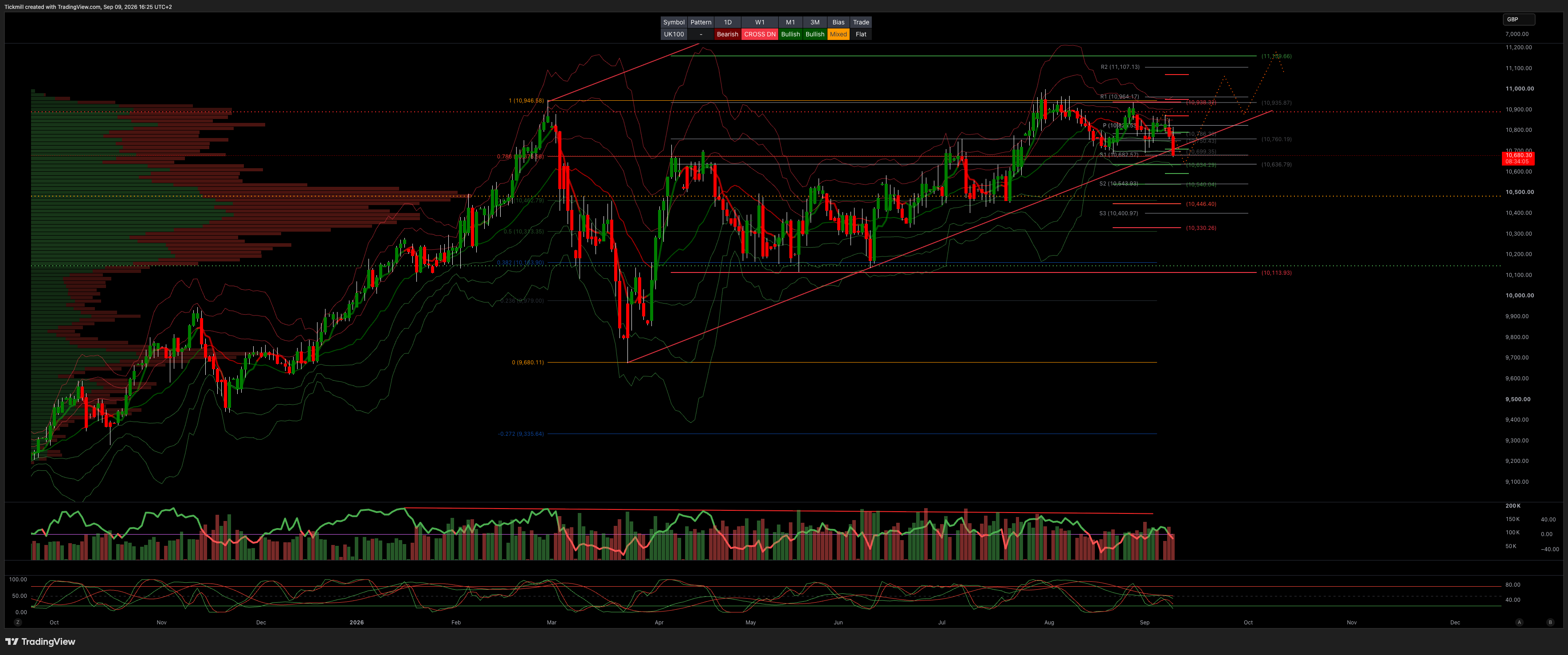
FTSE Finish Line September 9, 2026: FTSE Six Week Lows As Oil Surges
U.K. stocks sunk nearly 1% heading into the close on Wednesday amid rising concerns about global economic growth, as oil prices climbed to a multi-week high after U.S. forces destroyed five Iranian tankers and Tehran retaliated by launching missile strikes in Jordan. Brent crude futures surged past the key psychological $100 mark to $100.49 a barrel, gaining more than 2.5%, while WTI crude oil futures rose to $95.09 a barrel, up about 2.3%.
Selective corporate news provided localised buying interest despite the broader market decline. Victrex soared 15% after lifting its full-year pre-tax profit guidance and appointing an interim CFO. Energean rallied 7.5% as the hydrocarbon explorer posted a 45% jump in first-half profit, while Aberdeen Group advanced 1.8% after naming insurance veteran Torbjorn Magnusson as its new chair. Additional modest gains of 0.6% to 1.7% were logged by Computacenter, Centrica, BP, SSE, Severn Trent, Entain, Endeavour Mining, Associated British Foods, and BT Group.
Widespread selling hit broad sectors across the main index. Autotrader Group dropped about 4.5% and Burberry Group drifted lower by 3.2%. Losses of 2% to 3% hit a wide range of heavyweights, including Lion Finance, Barclays, Games Workshop, Halma, HSBC Holdings, Rolls-Royce Holdings, M&G, Lloyds Banking Group, Coca-Cola HBC, Prudential, IAG, 3i Group, LSEG, Melrose Industries, Anglo American Plc, and Antofagasta. Sharp declines were also registered across NatWest Group, Standard Chartered, Smiths Group, F&C Investment, Intercontinental Hotels Group, Investec, Aviva, and Legal & General.
On the monetary and policy front, Bank of England Governor Andrew Bailey and senior MPC officials conveyed a consistent message during their appearance before the Treasury Select Committee. The BoE emphasized a clear distinction between domestic disinflation—bolstered by a slack labor market and high household savings—and ongoing external supply shocks. While geopolitical energy disruptions may fuel headline inflation fluctuations, the MPC sees little evidence of second-round wage impacts, maintaining a preference for keeping rates steady for an extended period. This stance contrasts sharply with money-market expectations, which are currently pricing in about three 25 basis point rate hikes by mid-2027.
Fiscal supply dynamics also remained under scrutiny. The UK Debt Management Office successfully completed a £4.25 billion syndication of 5R56s, taking total gilt issuance for the first half of the year to £139 billion—over 56% of its annual target. With long-term funding costs elevated, FY26 is on track to produce the lowest DV01 supply in more than twenty years. Meanwhile, the Bank of England's proactive Asset Purchase Facility sales are projected to raise post-QT gilt disposals to £86 billion by mid-September, resulting in an estimated £42 billion in mark-to-market losses.
Finish Line: U.K. equities succumbed to mounting global growth fears as surging crude oil above $100 a barrel reignited inflation anxieties. While corporate updates at Victrex and Energean generated strong stock-specific upside, broad declines across banking, insurance, and industrial giants dragged the index lower. With central bankers navigating supply-shock risks against a softening domestic backdrop, market sentiment remains decidedly defensive.
TECHNICAL & TRADE VIEW – FTSE100
Daily VWAP Bearish
Weekly VWAP Bearish
Above 10650 Target 11150
Below 10600 Target 10500
Disclaimer: The material provided is for information purposes only and should not be considered as investment advice. The views, information, or opinions expressed in the text belong solely to the author, and not to the author’s employer, organization, committee or other group or individual or company.
Past performance is not indicative of future results.
High Risk Warning: CFDs are complex instruments and come with a high risk of losing money rapidly due to leverage. 69% and 73% of retail investor accounts lose money when trading CFDs with Tickmill UK Ltd and Tickmill Europe Ltd respectively. You should consider whether you understand how CFDs work and whether you can afford to take the high risk of losing your money.
Futures and Options: Trading futures and options on margin carries a high degree of risk and may result in losses exceeding your initial investment. These products are not suitable for all investors. Ensure you fully understand the risks and take appropriate care to manage your risk.
Patrick has been involved in the financial markets for well over a decade as a self-educated professional trader and money manager. Flitting between the roles of market commentator, analyst and mentor, Patrick has improved the technical skills and psychological stance of literally hundreds of traders – coaching them to become savvy market operators!